Do You Need a Passport for an Alaskan Cruise?
One of the first questions I get from clients planning an Alaska cruise is whether they need a passport. It makes sense to ask, because Alaska is a U.S. state, yet most Alaska cruise itineraries sail through Canadian waters and stop at ports in British Columbia. The answer depends entirely on the type of cruise you’re booking.
The Quick Answer:
Closed-loop Alaska cruise (round-trip from the same U.S. port like Seattle or San Francisco): U.S. citizens do NOT need a passport. You can sail with an official birth certificate plus a valid government-issued photo ID (or a couple of other exceptions described below).
Open-jaw Alaska cruise (different departure and arrival ports): A valid U.S. passport book is required.
Either way: The U.S. State Department strongly recommends all cruise ship passengers carry a valid U.S. passport book regardless of whether it is technically required.
If you want one resource that covers all of this and then some, my Alaska Cruise Planning Guide is what I put together after all of my Alaska cruises. It walks through documents, booking timelines, what to expect at each port, packing, and shore excursions. It covers everything I’ve learned after sailing to Alaska almost a dozen times.
Closed-Loop Alaska Cruises: No Passport Required (With Conditions)
A closed-loop cruise departs from and returns to the same U.S. port. Round-trip Alaska cruises from Seattle are the most common example. Under the Western Hemisphere Travel Initiative (WHTI), a joint policy from the U.S. Department of Homeland Security and the U.S. Department of State, U.S. citizens on closed-loop cruises can re-enter the United States without a passport book, but you’ll need other documents instead:
According to Customs and Border Protection, adults 16 and older need one of the following:
- A government-issued birth certificate (original or certified copy) plus a valid government-issued photo ID with photo, name, and date of birth, such as a driver’s license. Note that a regular driver’s license proves identity only, not citizenship, which is why you need the birth certificate alongside it.
- A valid U.S. passport book or U.S. passport card.
- A state-issued Enhanced Driver’s License (EDL). The EDL is unique because it serves as both proof of citizenship and proof of identity in a single document. No additional ID is needed alongside it. EDLs are currently issued in Michigan, Minnesota, New York, Vermont, and Washington State. They are accepted at land and sea border crossings but not for international air travel.
- A Trusted Traveler card such as NEXUS, SENTRI, or FAST.
Children under 16 need only proof of citizenship such as an original, notarized, or certified copy of their birth certificate, a Consular Report of Birth Abroad, or a Naturalization Certificate. No photo ID is required for this age group.
Important Note: Even on a closed-loop Alaska cruise, your specific cruise line may require a valid passport regardless of WHTI rules. Cruise lines publish their own travel document policies that can be stricter than the government minimum. Always verify requirements directly with your cruise line before you sail.
It’s also worth noting that some White Pass Yukon excursions cross into Canada. If your tour disembarks in Canada or returns by bus, you will need a passport. The shorter, round-trip train excursions that stay on the train typically do not require one.
Open-Jaw Alaska Cruises: A Valid Passport Book Is Required
If your Alaska cruise itinerary starts in one port and ends in a different one, you need a valid U.S. passport book. This includes popular one-way itineraries like Seward (Anchorage) to Vancouver, and Vancouver to Seward.
In practice, open-jaw Alaska cruises require a valid passport book because you will either fly internationally or start/end the cruise in Canada. A passport card is not valid for international flights, and a birth certificate will not get you on a plane home from Vancouver.
Alaska cruisetours, which combine a cruise with overland travel through Denali or the Kenai Peninsula, are almost always open-jaw itineraries. If you’re booking a cruisetour with any cruise line, plan on a valid passport book regardless of the cruise portion.
Passport Requirements by Departure Port
The closed-loop versus open-jaw distinction becomes easier to understand when you look at it through the lens of where your cruise actually starts and ends.
Alaska Cruises from Seattle (Round-Trip) A round-trip Alaska cruise departing from and returning to Seattle is a closed-loop itinerary. U.S. citizens can technically board with a birth certificate and a valid government-issued photo ID. A passport is strongly recommended but not required by U.S. Customs and Border Protection.
Vancouver Alaska Cruises Roundtrip cruises that depart from Vancouver require U.S. citizens to enter Canada before boarding, which means you need a valid passport to get there in the first place. If you are flying into Vancouver to board your ship, your airline requires a passport for that international flight regardless of what the cruise line says. Plan on a passport book for any itinerary that starts in Vancouver.
Seward or Whittier (One-Way Cruises) These are open-jaw itineraries. You will likely depart from Vancouver to begin your journey and disembark in Alaska, or vice versa. Either way, international air travel is involved and a valid passport book is required.
Why the U.S. State Department (and I) Always Recommend a Passport Anyway
Even if your closed-loop itinerary technically allows you to sail without one, I tell every one of my clients to bring a valid passport book. The U.S. State Department’s official cruise travel guidance states that they strongly recommend all cruise passengers travel with a passport book, even when it is not required by the cruise line. Here’s why that recommendation exists.
Medical Emergency or Hospitalization
If you or someone in your travel party needs to be admitted to a hospital in a Canadian port (Victoria) and cannot return to the ship before it departs, you will need to fly home independently. Without a valid passport, getting on an international flight is not possible. The State Department specifically cites this scenario as a primary reason to always carry your passport book.
Missing the Ship’s Departure
Shore excursions might hit a snag, transportation breaks down, weather delays happen. If you miss the ship at a port of call in Canada, you need to catch up to the ship at its next stop or get yourself home. Either option might require a passport for international travel.
Emergency Medical Evacuation
In a serious medical situation, you may be airlifted to the nearest appropriate facility regardless of where the ship is sailing. That facility could be anywhere in Canada. Getting home from there requires a passport book.
The peace of mind a passport provides is worth more than the cost and time of getting one before you cruise. This is one of those situations where the official minimum and the smart move are two very different things.
Passport Book vs. Passport Card: What’s the Difference?
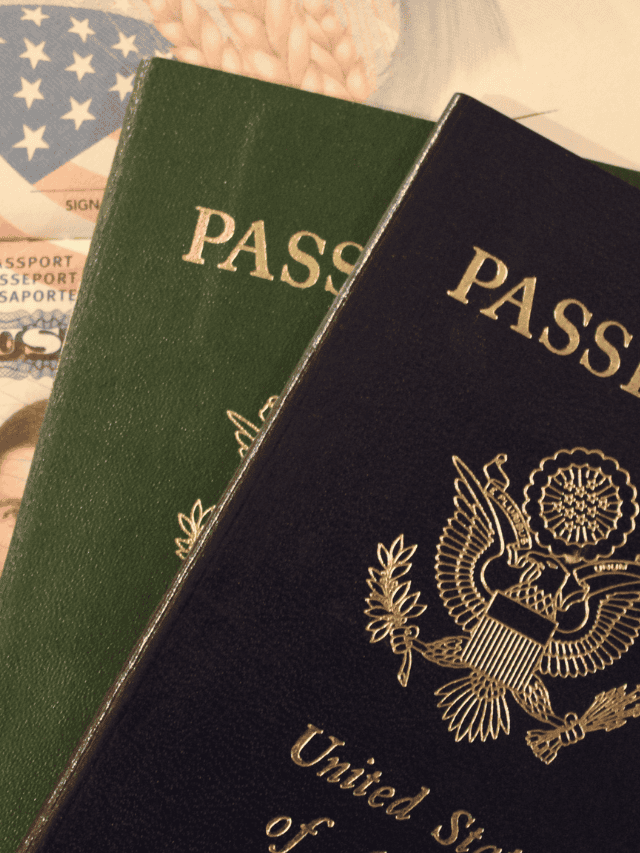
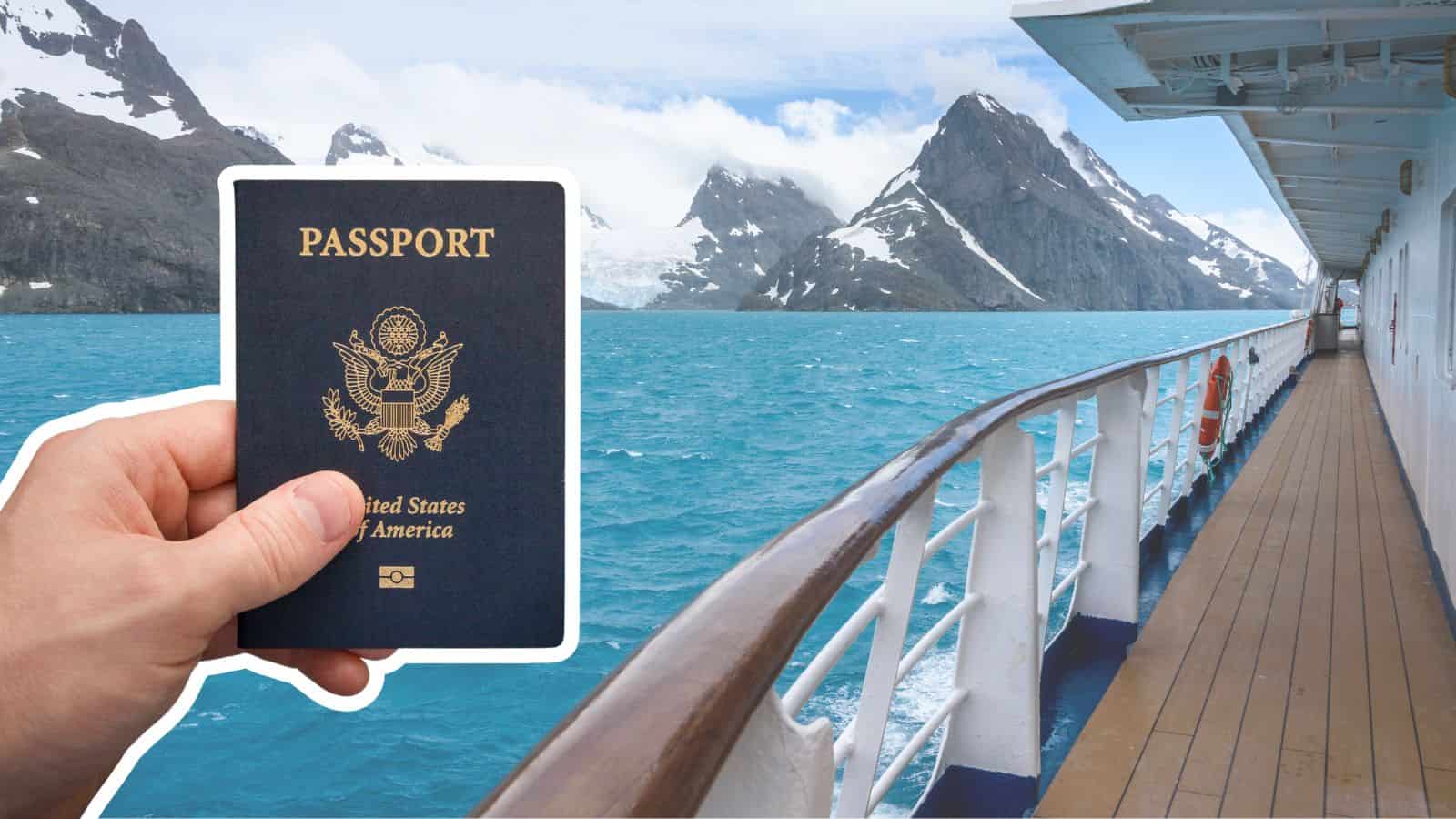
A U.S. passport book is the standard blue booklet accepted for all forms of international travel, including air, land, and sea. This is the document that solves every scenario.
A U.S. passport card is a wallet-sized card accepted only for land border crossings and sea ports of entry between the U.S., Canada, Mexico, Bermuda, and the Caribbean. It is not valid for international air travel under any circumstances.
For a closed-loop Alaska cruise, a passport card counts as a WHTI-compliant document for re-entering the U.S. by sea. But it will not help you in any of the emergency situations described above where air transportation is required.
Ready to get your Alaska cruise planning dialed in from the start? My Alaska Cruise Planning Guide covers document timelines, booking windows, packing lists, and what to expect at every major Alaska port. It’s the resource I built for exactly this kind of trip. Get my Alaska Cruise Planning Guide →
What About Non-U.S. Citizens?
U.S. Lawful Permanent Residents (Green Card Holders)
If you hold a U.S. green card and are not a U.S. citizen, the WHTI closed-loop exception does not apply to you the same way. You need your valid passport from your country of citizenship plus your Permanent Resident Card. Depending on your nationality, you may also need a Canadian visa or Electronic Travel Authorization (eTA) for ports in British Columbia. Check the Canadian government’s entry requirements well before your departure date.
Citizens of Other Countries
Foreign citizens need a valid passport from their country of citizenship plus any required visas for both the United States and Canada. Some nationalities need a re-entry visa if they will be leaving and re-entering the U.S. during the cruise. Visa requirements vary significantly by country, and need to be checked for both U.S. requirements as well as Canadian requirements. Cruise lines often clarify what is needed, and a travel advisor (like me!) can help give you the information you need.
Do Children Need a Passport for an Alaska Cruise?
Children follow the same general rules as adults, with one useful simplification for closed-loop cruises: U.S. citizen children under age 16 need only proof of citizenship. An original or certified copy of their birth certificate is sufficient. No photo ID is required for this age group on closed-loop cruises.
Children 16 and older follow adult requirements and need a birth certificate plus photo ID, or another WHTI-compliant document.
That said, if your child doesn’t yet have a passport, I’d encourage getting one before your cruise for the same emergency reasons that apply to adults. A child needing emergency medical care abroad faces the same documentation challenges as any traveler.
One separate note: children under 18 traveling with only one parent, or with someone other than a parent, may need a notarized letter of consent from the absent parent. Cruise lines enforce this independently of passport requirements, so it’s worth sorting out before you get to the port.
More Alaska Cruise Planning Resources
Now that you know what travel documents you need, the next step is choosing the right cruise line, itinerary, and a packing list for your trip. Here are of my resources I’d point you to next:
If you’re still deciding between cruise lines, my Princess Alaska cruise review and Holland America Alaska cruise review give you a real look at what each experience is actually like, so you can make a confident choice.
If you have other questions about what to expect before, during, and after your cruise, my Alaska cruise planning questions post covers the things clients ask me most often.
And once your documents and booking are sorted, my Alaska cruise packing list with free printable will make sure you don’t leave anything essential behind.
Planning your Alaska cruise and want everything in one place? My Alaska Cruises Guide covers documents, timelines, packing, ports, and shore excursions, built from my years of cruising to Alaska both from Seattle and from Vancouver.

Want Help Planning Your Alaska Cruise?
Alaska offers a unique and bucket list travel experience. The glaciers, the wildlife, the scenery. It’s one of those trips that is memorable for a good reason.
As a travel advisor who specializes in Alaska cruises, I help clients choose the right cruise line and cabin, sort out document timelines, advise on which shore excursions are worth booking early, and stay available if anything comes up before or during the trip.
If you’d like help planning yours, fill out the form below and I’ll email you to get started on your trip.
Frequently Asked Questions
Can I go on an Alaskan cruise without a passport?
Yes, if you are a U.S. citizen on a closed-loop Alaskan cruise (round-trip from the same U.S. port). You can use an original or certified copy of a birth certificate, plus a valid government-issued photo ID. However, the U.S. State Department strongly recommends carrying a valid passport book regardless, for emergency situations that may require international air travel.
Do I need a passport for an Alaska cruise from Seattle?
If your Seattle cruise is round-trip and returns to Seattle, you’re on a closed-loop itinerary and can use a birth certificate plus photo ID. If your cruise departs Seattle and ends in a different port such as Seward or Anchorage, you need a valid passport book.
Do Alaska cruises go through Canada?
Yes. The Inside Passage route that most Alaska cruises follow passes through Canadian waters, and many itineraries include stops in British Columbia, including Vancouver and Victoria. This is because of the U.S. Passenger Vessel Services Act, which requires foreign-flagged cruise ships to include at least one foreign port on itineraries between U.S. ports.
Because of this rule, Alaska cruise passengers should always check passport and documentation requirements before sailing.
What documents do I need for an Alaska cruise if I’m not a U.S. citizen?
Non-U.S. citizens need a valid passport from their country of citizenship. Green card holders also need their Permanent Resident Card. Depending on your nationality, you may need a Canadian eTA or visa in addition to U.S. entry documents. Verify your specific requirements before booking.
Is a passport card enough for an Alaska cruise?
A passport card meets the WHTI re-entry requirements for closed-loop Alaska cruises by sea. But it is not valid for international air travel, so it will not help you if you need to fly home unexpectedly from a Canadian port. A passport book is the better choice.
Can I use a photocopy of my birth certificate for an Alaska cruise?
I would not risk it. CBP explicitly allows photocopies only for children under 15. For adults, cruise line policies vary and some lines require an original or certified copy and will not accept a personal photocopy at boarding. Since documentation requirements can mean the difference between boarding your ship and being turned away with no refund, always bring an original or certified copy of your birth certificate. If you are unsure what your cruise line requires, contact them directly before you sail.
Note: Travel document requirements can change. Always verify current passport and entry requirements with your cruise line, U.S. Customs and Border Protection, and the U.S. State Department before your departure date.